What draws people in higher education so powerfully to working with students? Perhaps it’s their vivacity—that untempered enthusiasm we remember from our own younger selves, before the workforce jaded us in some ways. Students carry an ambition and excitement that only comes before years of hearing “no” and encountering those inevitable glass ceilings.
Don’t get me wrong—I’m proud of the wisdom and patience I’ve gained through my 30s, qualities I certainly lacked in my 20s. But students: they’re the gems, the prize audience for anyone in academia. They represent our future and serve as vessels for either change or continuity. At this unique moment in their lives, they’re juggling countless responsibilities while simultaneously figuring out who they are and carving out their futures. Working with them—alongside them, and if you’re fortunate enough, guiding them—is genuinely inspiring.
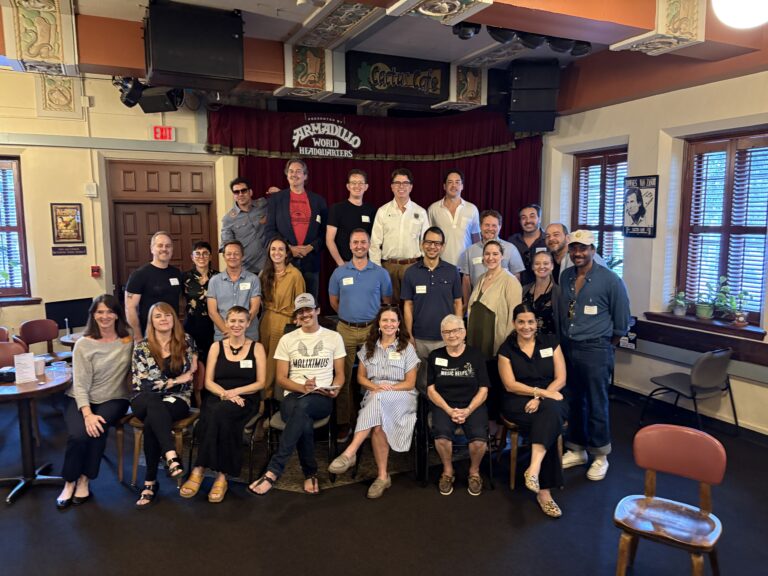
Currently, I’m working with four student groups who participated in the Social Impact Challenge, a pitch competition hosted by the Moritz Center for Societal Impact at Texas Social Work’s 75th anniversary celebration in September 2025. When I say “working with,” I mean they’re doing all the actual work. As a mother of young children, I’ll admit I was initially concerned when each group pitched their ideas. A cynical voice whispered: We’re giving them money—what if they never follow through? I’ve seen good intentions come and go, floating by like cherry blossoms that look spectacular one moment and are forgotten the next.
I am pleased to report that none of these students has dropped the ball. And shame on me for ever doubting them.
Each group has navigated an intense financial process, learning to distribute funds to vendors (including fellow students), participants, and community partners. They’ve felt the sting as money disappears from their ledgers while their dreams take shape, making sense of paperwork at every turn. They’ve negotiated supply costs, drafted protocols, worried over timelines, and stressed about participation rates. And here’s something else – they’re unfailingly gracious and grateful. Whatever generation we’re labeling them now (I’ve lost count), these graduate students are absolutely on top of their game.
These responsible adults—who are also full-time students—have planned remarkable projects with real impact. One explores mental health discussions through literature with incarcerated students. Another breaks down mental health stigma in the local Asian American community through arts-based healing strategies. A third helps Portuguese-speaking children strengthen their native language skills to improve English comprehension. The fourth teaches food-insecure UT students to cook and shop for affordable, nutritious meals.
How fortunate am I? I get to work closely with these energetic students and somehow receive credit for it, despite merely supporting them when asked. Perhaps part of the magic lies in students not realizing what a gift they are to older generations. They’re simply being themselves while we absorb their inspiration, hoping to shield them just enough—but not too much—from any negativity that might derail their momentum.
If you have the means, I highly recommend working with students as often as possible. The energy exchange is transformative, and the reminder of what’s possible when passion meets purpose is invaluable.